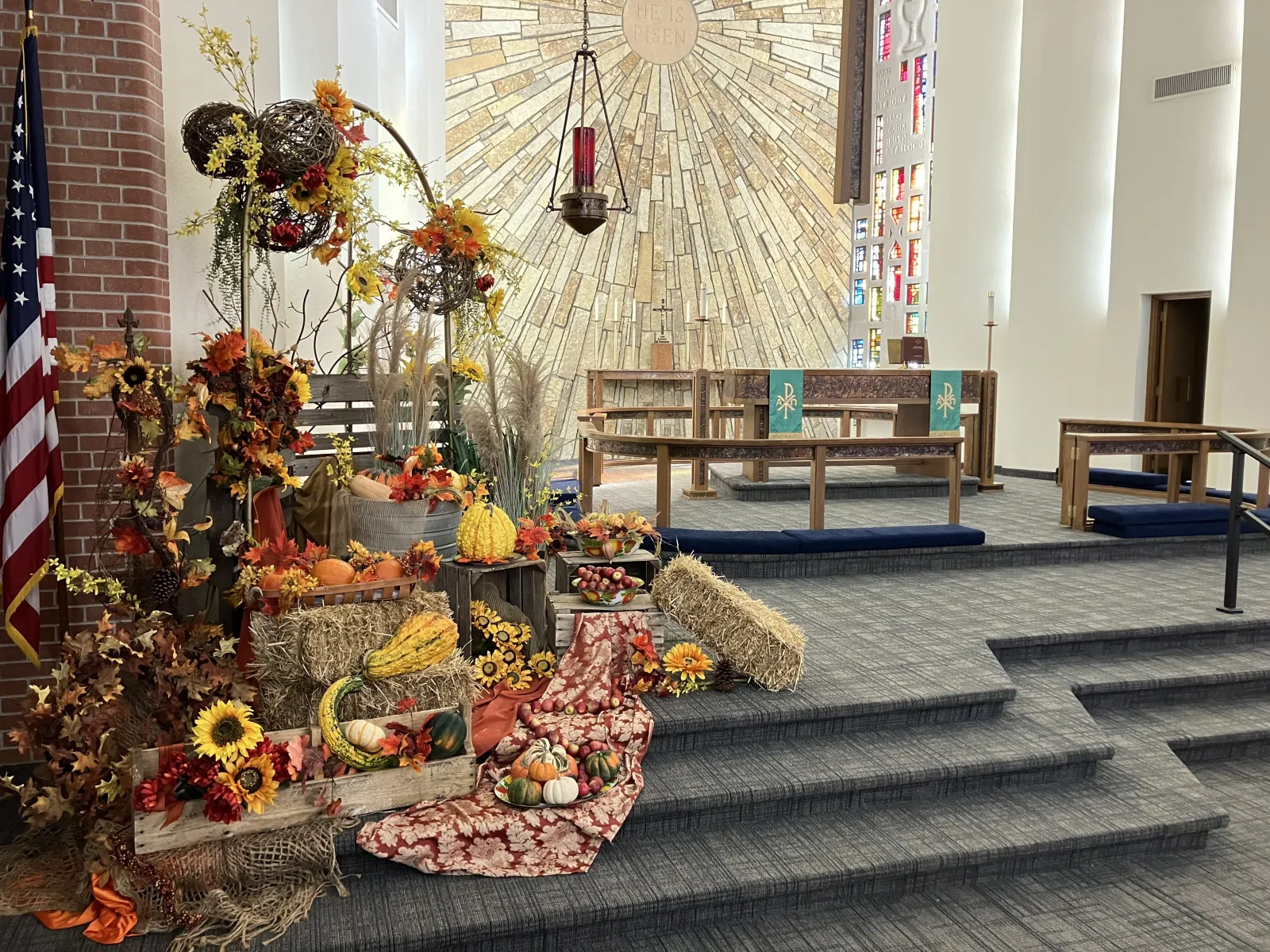

The Beginning
The tiny seed from which the congregation grew was planted on January 2, 1909, in an announcement in the Flint Daily Journal which read: “There will be English Lutheran services Sunday evening at 7:30 at the home of Mrs. George Norwood, 901 Mary Street. The Rev. George E. Mennen of Detroit will preach a New Year's sermon. All Lutherans of Flint who would be interested in establishing a Lutheran mission are cordially invited to attend. Friends are also invited."
Efforts had been made before to establish a Lutheran church in Flint, but now the time had come even though the small attendance of seven people at this service could not have been too encouraging. However, interest grew and by Spring the outlook was so promising that a call was accepted by Rev. Theodore Andres and he was installed on June 20, 1909 and became the first resident pastor. Pastor Andres served 21 years as a faithful shepherd in laying the foundation of a strong Lutheran church in the City of Flint. His efforts under God contributed much in those important days of Lutheranism in Flint.
The First Church on Hamilton Avenue
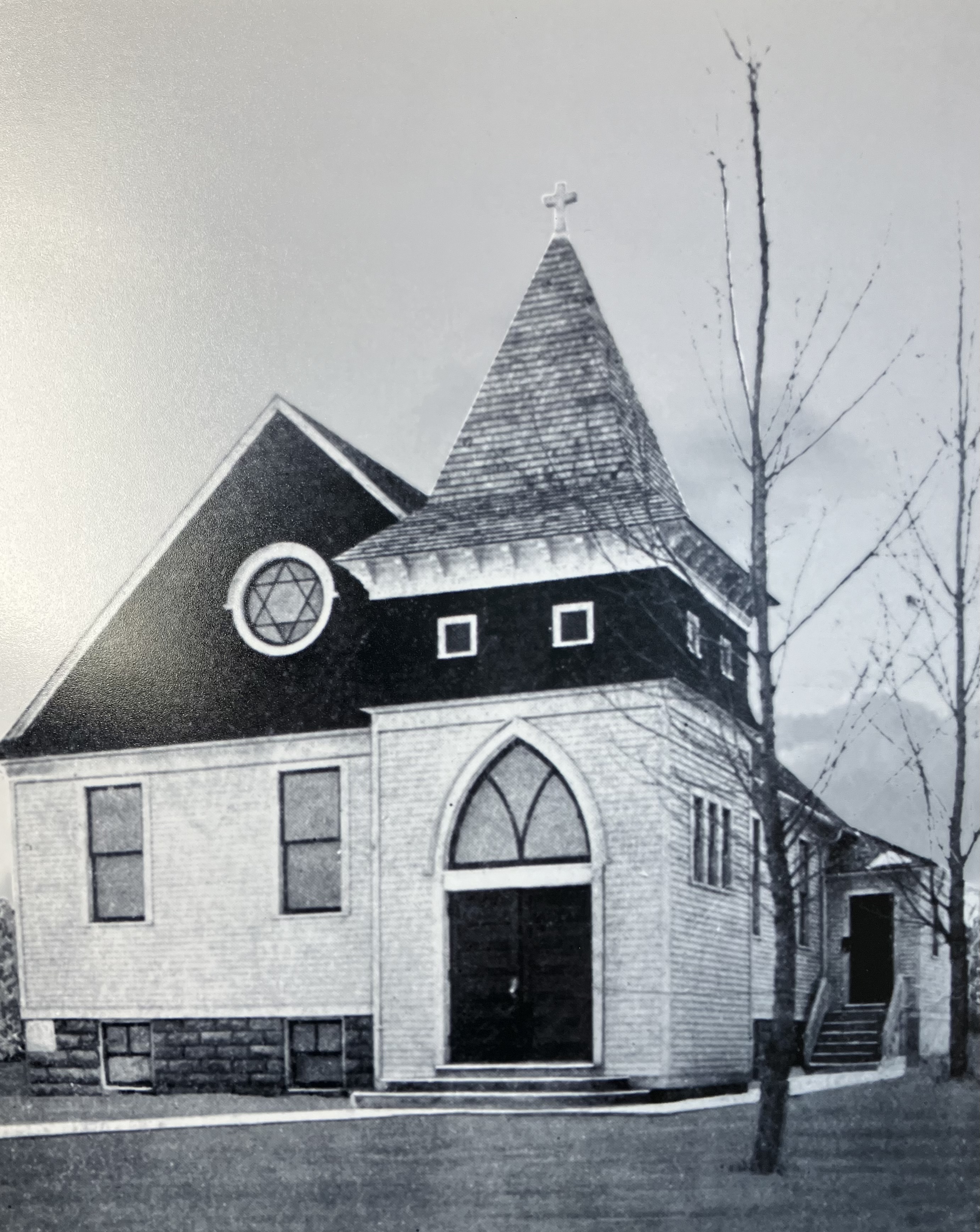
After the first few services in Mrs. Norwood's parlor at 901 Mary Street, the Forester's Hall on South Saginaw and Kearsley Streets was rented and both German and English services were held. But the need for better quarters grew, and with the help of the Michigan Church Extension Board a lot was purchased at 731 East Hamilton Avenue. The cornerstone for Flint's first Lutheran church was laid October 3, 1909 and the white frame building was dedicated on January 9, 1910.
Two weeks later the congregation was officially organized when ten men adopted and signed the constitution. Those who gathered at the new church January 24, 1910 were: Rev. Theodore Andres, Charles Zassenbraker, Frank Nitz, Walter Wendt, Herman Steinberg, Henry Bierlein, Fred Zimmermann, Leonard Kloha, Adolf Kaiser, and Oscar Kuerbitz. First officers were Messrs. Steinberg and Wendt, Elders; Mr. Bierlein, Secretary; and Mr. Kaiser, Treasur-er. The City of Flint had a population at this time of 38,560.
The first church served the congregation until 1918 when the need for a larger building was required. As early as 1916 studies were made and a decision followed to relocate. A parsonage was first built at 618 Mary Street.
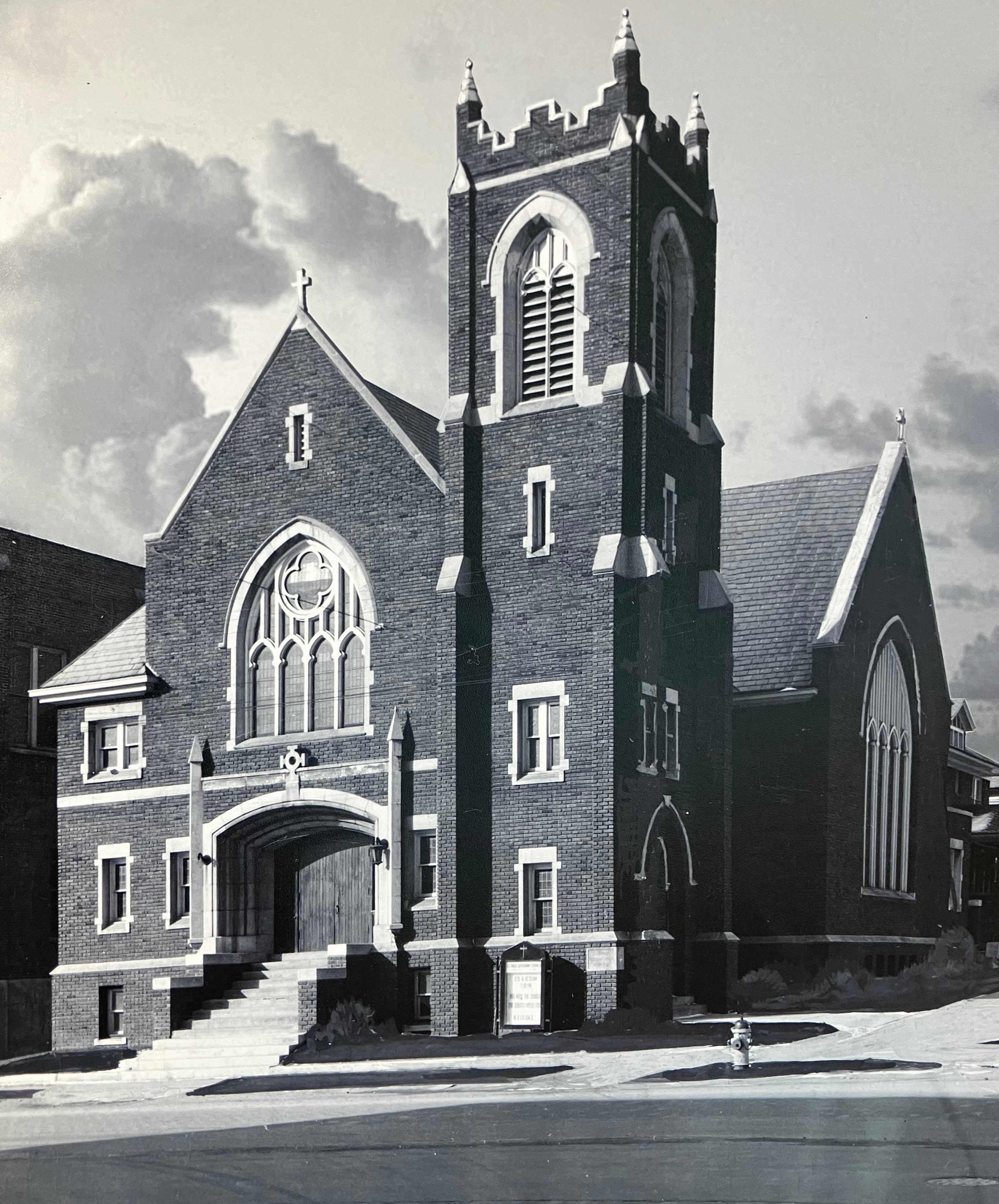
The Second Church at 1539 N. Saginaw Street
Cornerstone of the new church at Saginaw and Mary Streets was laid November 11, 1917 and on October 13, 1918 the building was dedicated to the service of the Triune God.
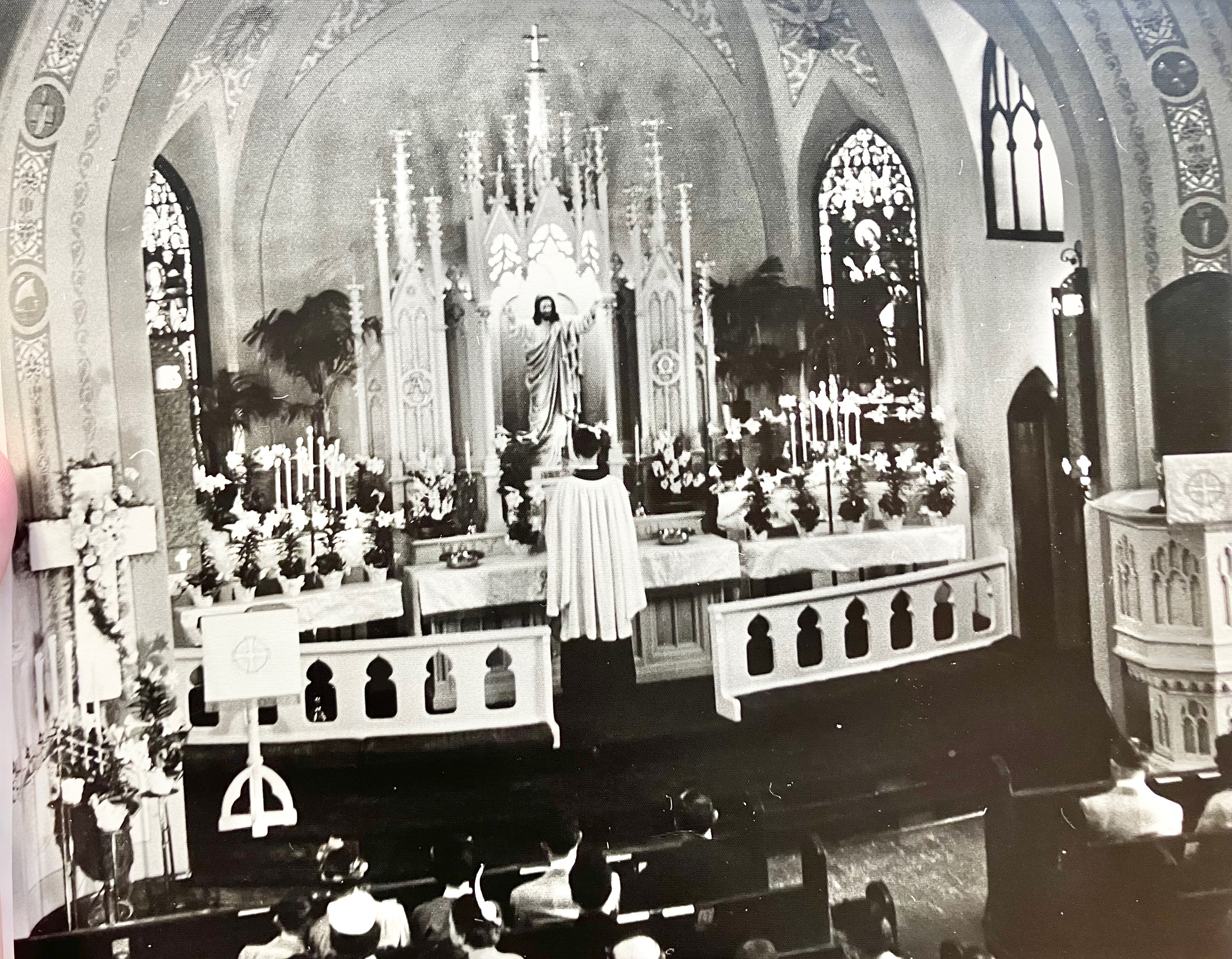
With the enlarged quarters, the congregation grew steadily under the guidance of Pastor Andres. Then in 1930 he accepted a call to Valparaiso University, preaching his farewell sermon on Septermber 21.
The Rev. Otto Sohn accepted the call of the congregation on November 11, 1930 and was installed December 7, preaching his first sermon here December 14 of that year. Under his guidance and the blessing of the Lord, the congregation continued to grow. Just prior to Pastor Sohn's coming to St. Paul, the membership re-established a Christian day school for the secular and religious instruction of its children in 1928, under the leadership of Mr. Albert M. Wunderlich.
In April 1939 the Michigan Lutheran bulletin listed St. Paul church with 825 communicants within the Frankenmuth Circuit (Rev. O.E. Sohn, Visitor).
Pastor Sohn served faithfully; then, during the summer of 1947, he accepted a call to teach Pastoral Theology and Homiletics at Synod's Concordia Seminary at St. Louis, Missouri.
A School Continues as a Part of Parish Goals
A commemorative booklet, written in 1935 on the first quarter century of the St. Paul congregation, used the following quotation: "And these words, which I command thee this day, shall be in thine heart, and thou shalt teach them diligently unto thy children." (Deut. 6:6-7)
It was in conformity with this command of our Lord that St. Paul Church started and continues to maintain a Christian day school for its children.
The First School in Basement of Church on Saginaw Street
The beginning for a school was made in September, 1920 in a basement room in the church at Saginaw and Mary Streets, with the Mission Board giving financial aid The first teacher for several months was the Rev. Conrad J. Engelder, also engaged in mission work in the city. After a short time Mr. G.L. Kroenk, a graduate of Concordi College, Springfield, Illinois, took charge of the school. He was followed a year later b Mr. E. Schroeter from River Forest Teachers College.
Success of the venture encouraged the congregation to call a permanent teacher, Mr. E. J. Faulstick, a River Forest graduate. Enrollment grew to exceed 40, but after two years he accepted a call to another field and the congregation was unable to get a successor. This forced discontinuance of the school.
Then, in the summer of 1928, Mr. Albert M. Wunderlich accepted a call as teacher and after a thorough canvass of the congregation, school opened with 13 children enrolled in grades five, six and seven. The situation was far from ideal with inadequate facilities for classrooms, but the school continued to prosper. The eighth grade was added in 1931 and an assistant teacher, Mr. Otto Neuchterlein, a graduate of the St. Louis Seminary, was obtained to teach and help with pastoral duties.
The need for a school building became increasingly apparent, there being insufficient space and staff to take care of even half of the children of school age within the
congregation.
A School is Built Adjacent to the Church on Saginaw Street
Finally, in 1939, a drive was held and funds were raised to erect a school building at 1531 Saginaw Street beside the church. It was dedicated to the service of God on October 27, 1940, and served until late 1959 when the school was moved to its new quarters on Ballenger Highway.
Upon the opening of the school on Saginaw Street, the first women teacher, Miss E Hartmeister, was contracted and the enrollment was 78. Three years later, in 1943, a third room was opened and enrollment passed the 100 mark.
A school lunch program was started in 1945, by Mrs Leonard Kloha, assisted by Mrs. Louis Greb
Increases in enrollment continued and this required use of the school library, in 1957, in order to have a fifth classroom. This development brought about realization that larger facilities were necessary and its early evidence contributed to the decision in 1960 to relocate the entire church and school on Ballenger Highway.
Church and School Leadership Under Pastor Zeile
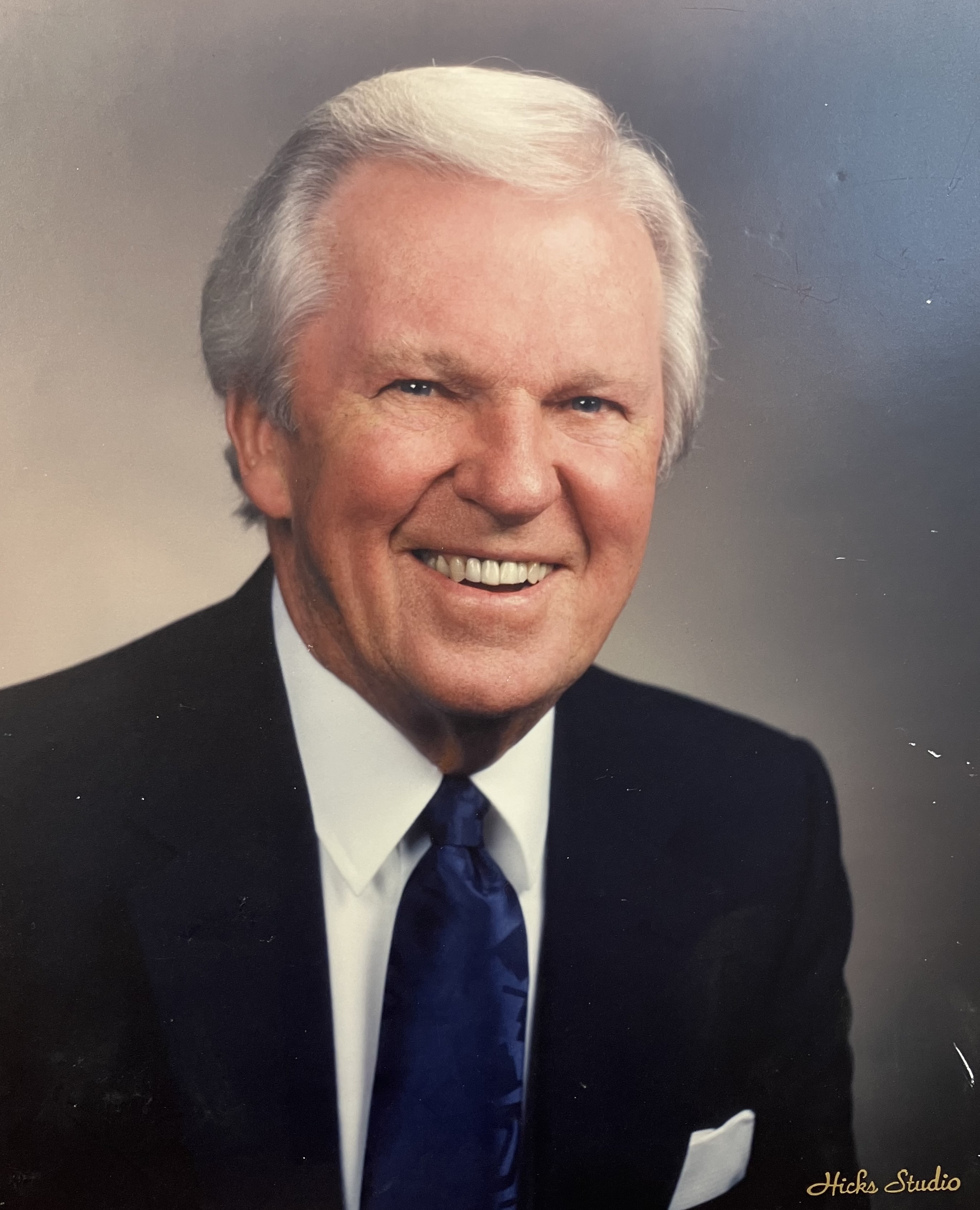
Following Pastor Sohn's moving to Concordia Seminary, St. Paul Church then called the Rev. Theodore A. Zeile, for its third spiritual leader. He was installed on September 21, 1947 and preached his first sermon on September 28. The congregation continued to grow and quarters became so crowded that the Voters' Assembly authorized an Expansion Planning Committee on December 3, 1950, which reported on April 1, 1951 that it was imperative, in view of the growth of the past and the outlook for the future, that steps be taken to provide larger facilities.
Planning for a New Church and School on Ballenger Highway
The property, a 7.26 acre site, which would accommodate a much larger church and school was located at 402S. Ballenger Highway, where the Flint River crosses, and on March 2, 1952 its purchase was authorized. Later some sentiment was expressed that St. Paul should start a new mission on the new property and enlarge its own quarters on Saginaw Street. As a result, a congregational meeting was held at which speakers presented arguments for moving, for expanding, or for starting a new mission. Again, the Voters' Assembly voted to move from our Saginaw Street location to a new building on the Ballenger site. The old church and school property were eventually sold to the Flint Board of Education
A Building Committee was formed and it held its first meeting January 17, 1955, with Warren E. Milner as Chairman. Later, Mr. Milner moved from Flint and Mr. Earl Black was appointed Chairman. A Building Finance Committee was set up and Mr. Robert Menges became Chairman. On October 3, 1955, a Loyalty Dinner was held at the IMA Auditorium and about 1000 members of St. Paul gathered to learn plans for a $500,000 canvass to finance their new church and school. On June 5th of the same year a contract was approved for hiring Mr. Earl Confer as architect. The final design included a nave, 59x100 feet, and a 30 foot chancel. The entire church building measures 67x200 feet; the school 81x262 feet.
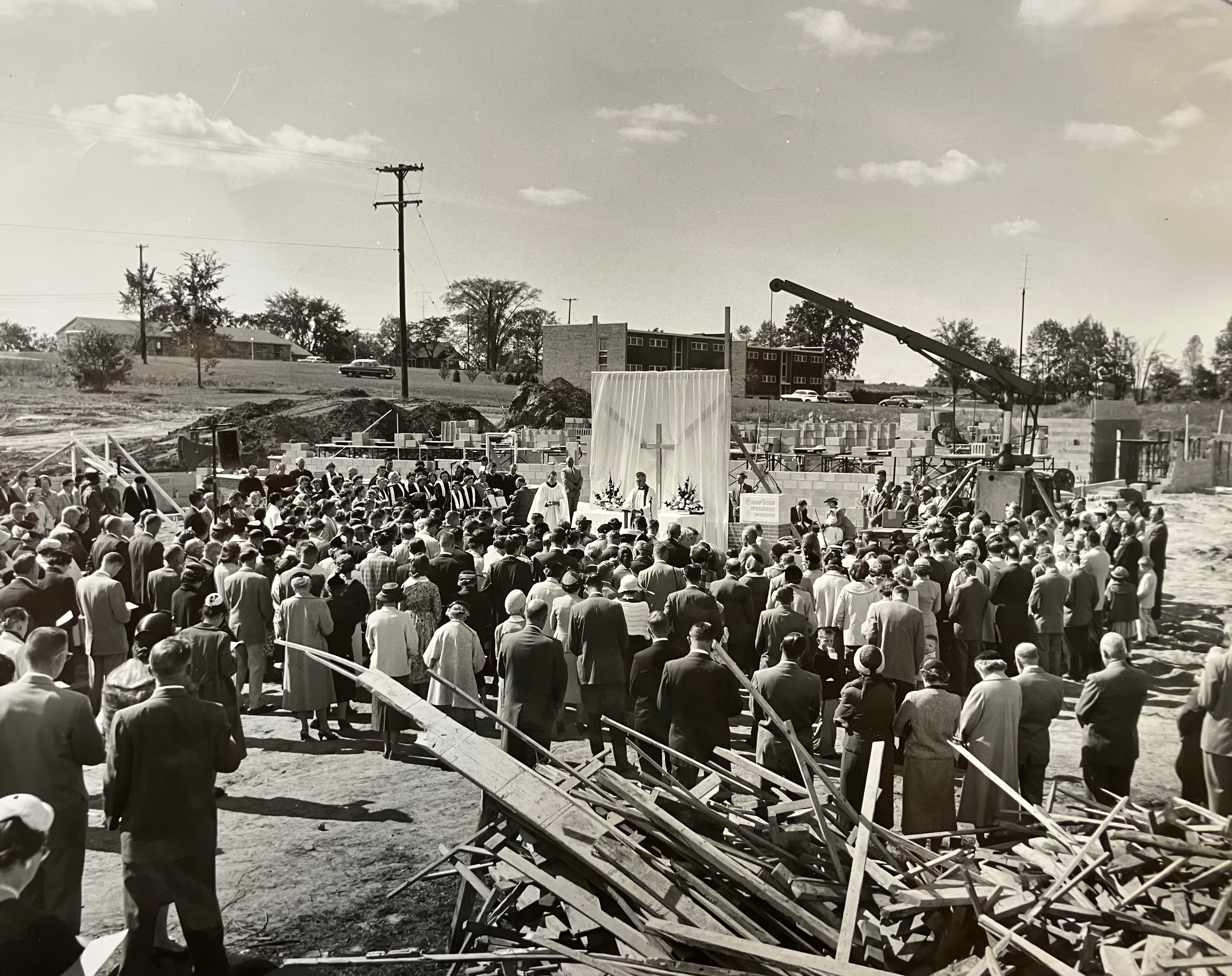
After long studies and many changes in plans the Building Committee was authorized to award a contract on June 27, 1958 for a church and school. A design plan for a gymnasium was postponed due to costs. Ground breaking ceremonies followed on July 20th and the cornerstone was placed with appropriate services on September 28, 1958. Its dedication to the work of the Kingdom with appropriate worship took place on February 28, 1960.
The building plans for the Ballenger site did not include a parsonage. A position was taken that the pastor should be able to reside in the community and experience the fellowship and daily living similar to the membership. A parsonage was purchased by St.
Paul at 3507 Mackin Rd., Flint. Pastor and Mrs. Zeile continue to live here as part of his St. Paul retirement program.
St. Paul Lutheran Church and School entered its second half of century of service with entirely new facilities, but with the same dedication to God's work in the name of our Lord Jesus Christ